AI Development Paradigm
How I use AI agents to build production-grade features without losing engineering control.
My AI development paradigm is built around three layers: a business-focused blueprint, reusable execution tools, and strict engineering discipline. The goal is not to let AI "just code," but to turn AI into a controlled execution system that produces useful software with clear checkpoints, validation, and human review.
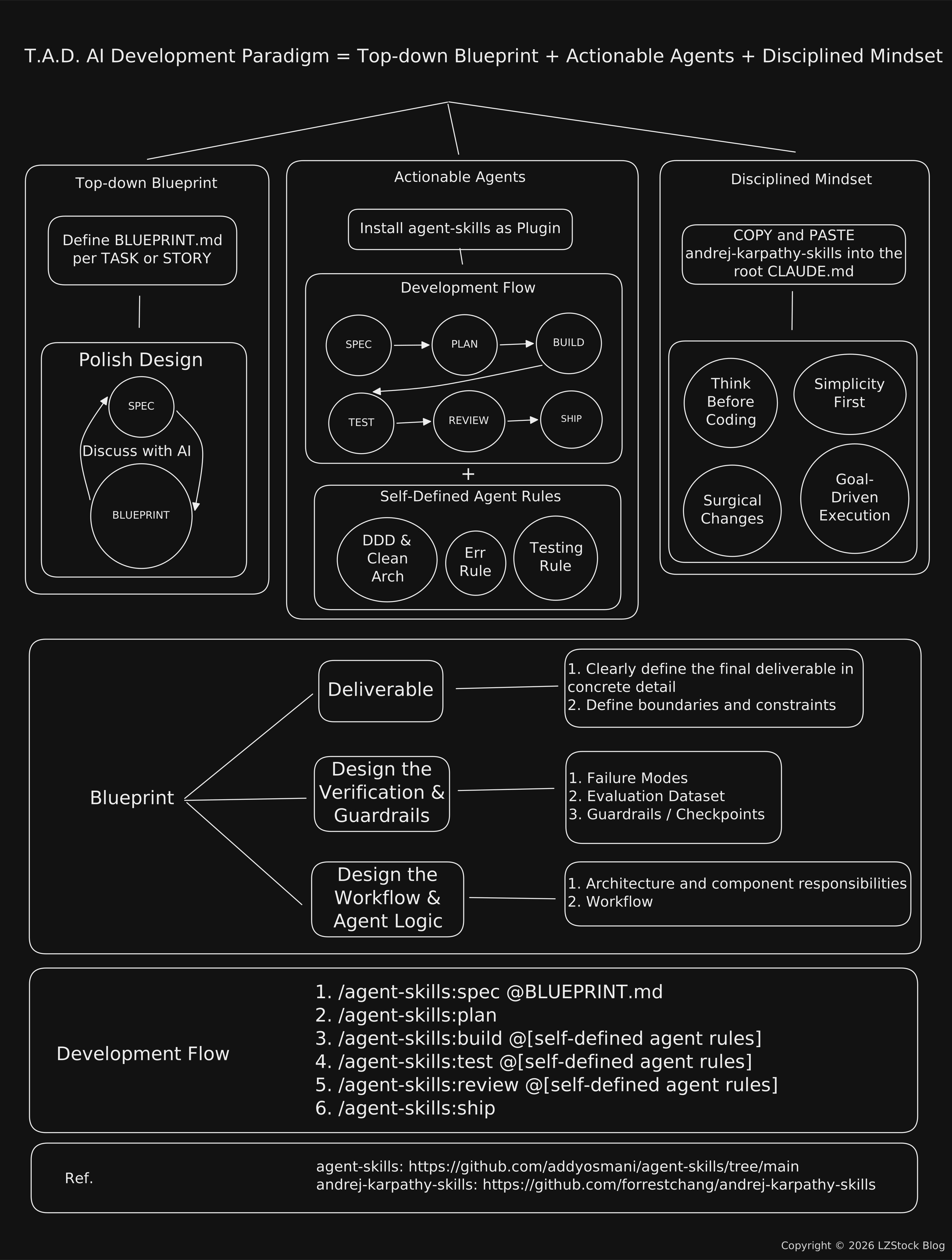
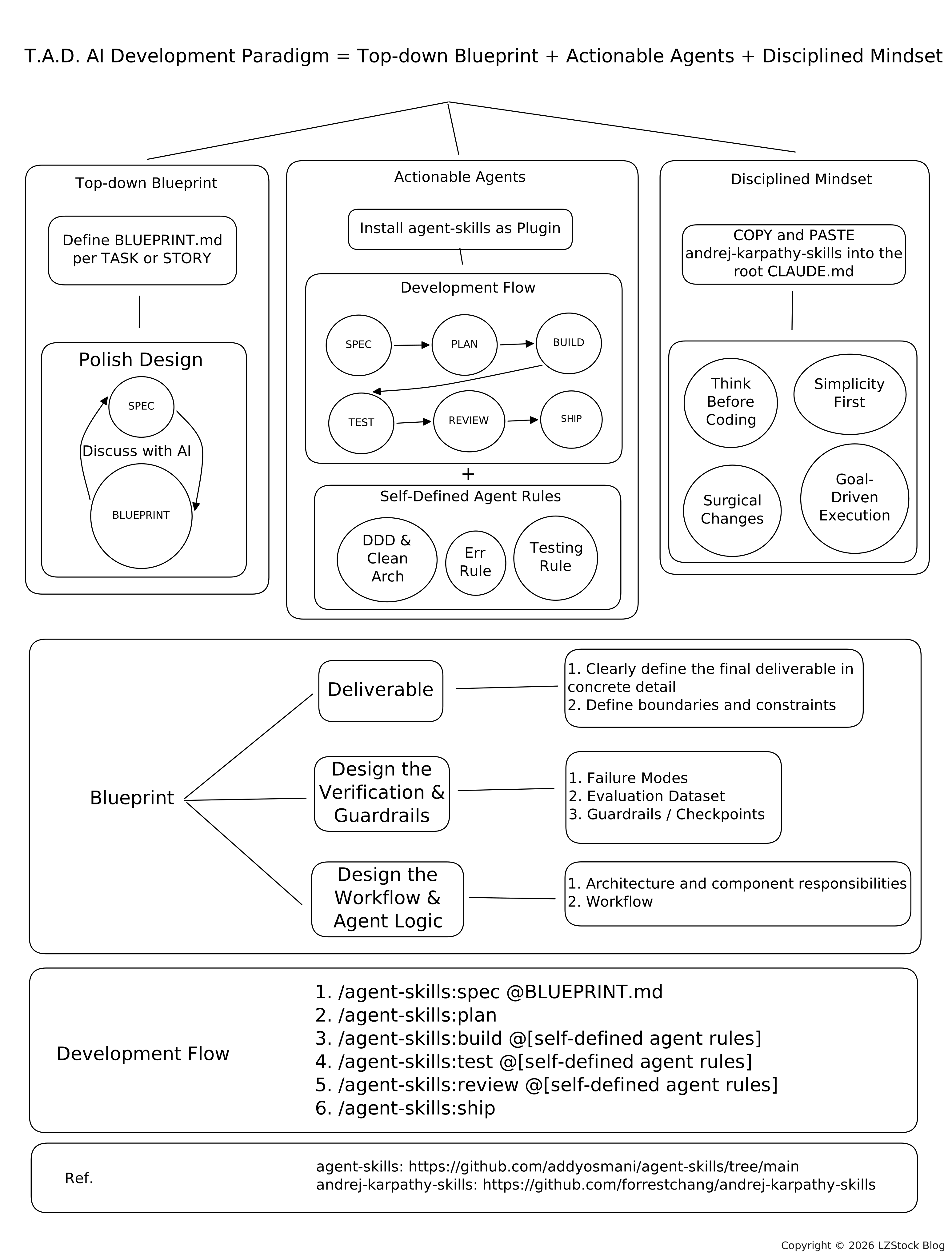
The T.A.D. Paradigm = Blueprint + Toolbelt + Mindset
This paradigm is designed to show four engineering signals that matter in real teams:
- Product judgment: start from the user-visible outcome, not the implementation idea
- Systems thinking: define inputs, outputs, failure modes, and checkpoints before coding
- Execution quality: turn repeatable engineering steps into reusable agent workflows
- Ownership: keep human review, validation, and rollback paths inside the process
The distinction is:
T.A.D.= paradigmSPEC -> PLAN -> BUILD -> TEST -> REVIEW -> SHIP= workflowDeliverable -> Verification -> Execution Flow= blueprint structure
| Tier | Framework / Tool | Core Positioning | Pain Points Solved |
|---|---|---|---|
| T - Top-down Blueprint | Forbes Reverse Engineering (Deliverable -> Verification -> Execution Flow) | System Architecture Blueprint | Prevents the team from building in the wrong direction. The blueprint forces the work to start from business value, expected output, and verification strategy before implementation begins. |
| A - Actionable Agents | Addy Osmani (agent-skills) | Execution Toolbelt | Improves execution quality by turning repeatable engineering practices, such as writing specs and running tests, into reusable agent commands with built-in guardrails. |
| D - Disciplined Mindset | Forrest Chang (andrej-karpathy-skills) | Core Behavioral Discipline | Prevents AI from acting without boundaries. The mindset layer keeps agents from over-engineering, changing unrelated code, or guessing when the context is ambiguous. |
Quick Workflow: SPEC -> PLAN -> BUILD -> TEST -> REVIEW -> SHIP
Before the workflow starts, I use a blueprint to align the product goal, constraints, and verification strategy. I usually begin with a simple prompt:
"I want to create a crawler."
Then I ask the AI to return the output in the BLUEPRINT.md format shown below.
After the first draft is generated, I ask it to persist the result:
"Write back to BLUEPRINT.md."
From there, I continue the back-and-forth process and feed in more context as I gather it, such as product requirements, API docs, edge cases, and high-level system design decisions.
Once a human has reviewed the blueprint, I run one final consistency check before converting it into a SPEC.md:
"Please identify any inconsistencies between the content, the API docs, and the rest of the context."
After that, I move through the delivery workflow: write the spec, create the plan, build the feature, run tests, review the result, and ship only after the checks pass. Revisions and re-runs are expected; they are part of the control loop, not a sign that the process failed.
T - Top-down Blueprint
The blueprint structure has three parts: deliverable, verification, and execution flow.
Blueprint Structure:
- 1. Define the Deliverable
  - Define Boundaries and Constraints
- 2. Design the Verification & Guardrails
  - Failure Modes
  - Evaluation Dataset
  - Guardrails / Checkpoints
- 3. Design the Execution Flow & Agent Logic
1. Define the Deliverable
The blueprint is the contract between the product goal, the human reviewer, and the AI agent. The first job is to define what success looks like before asking the AI to implement anything.
- Use case
- Input / output
- Acceptance criteria
Define Boundaries and Constraints
- Specify what must never happen under any circumstances
- Define technical, product, security, and operational constraints
2. Design the Verification & Guardrails
Failure Modes
- Which step is the most costly if it fails?
If the cost is low, occasional AI mistakes may be acceptable. If the cost is high, the workflow needs strict validation and may need to route the output back to a human reviewer.
Evaluation Dataset
- Prepare 50 "good" output examples and 50 "bad" examples that capture the mistakes AI is most likely to make, especially hallucinations. Test against both.
Guardrails / Checkpoints
- Database verification: write a tool to confirm against the source of truth
- Format validation: detect broken JSON output or invalid email formatting
- Content review: use a smaller but stable AI model as a validator to check whether the main model's output is toxic or includes competitor names
3. Design the Execution Flow & Agent Logic
Each epic should define its own execution flow and checkpoints. The goal is to make the agent's path explicit enough that a reviewer can understand where data comes from, where decisions are made, and where failures are caught.
Steps
For example:
- Data acquisition and preparation
- Define entry point
- Retrieve prerequisite data
- Checkpoint 1: Early return if a prerequisite is missing
- AI generation and processing
- Assemble prompt
- Generation
- Strict validation and safety net
- Checkpoint N: e.g. Format and logic check or Hallucination check
- Execution and closure
- Execution
- Logging and close
A - Actionable Agents
The blueprint defines direction. agent-skills turns that direction into repeatable execution steps across the workflow: spec, plan, build, test, review, and ship.
Example test step:
/agent-skills:test against @epics/[epics name]/[story or task name]/SPEC.md
D - Disciplined Mindset
The discipline layer defines how the AI should behave while working inside the codebase. I keep these rules in CLAUDE.md at the project root so every agent run starts with the same expectations.
.
├── CLAUDE.md
Source: andrej-karpathy-skills
Conclusion
The core idea is simple: a reliable AI workflow is not a single prompt. It is a loop with clear standards, checkpoints, retries, and escalation paths.
References
https://github.com/addyosmani/agent-skills
https://github.com/forrestchang/andrej-karpathy-skills
Claude Code in Depth: Building an Engineer Workflow with 100x Productivity in the AI Era